The Hero Persona
Jun 16, 2026In a previous journal I talked about creating my hero personas and how they allowed me to grow and evolve in many aspects of my life. Now I want to talk about how I got there.
We are constantly exposed to stories of heroic characters, first through fiction, then through pop culture in the form of athletes, actors, and world leaders. In my childhood I grew up in an environment where I didn’t fit in, mainly because of my appearance and culture. I didn’t have people that looked like me who I could look up to. I had to explore outside of my normal world for inspiration.
The first Asian hero I ever had was Bruce Lee. He was a huge movie star and a master of his craft. I admired his charisma and ability to command an audience. Being Asian was not so cool in the ’80s but Bruce Lee was an outlier. His skill and star power were indisputable.
I was an avid golfer in my youth and in 1993 I got to see a 17-year-old Tiger Woods compete against professionals at a golf tournament in Dallas. It was incredible to witness his greatness at such an early age. Tiger dominated his sport for over a decade and changed it for an entire generation.
What I admired most about Bruce Lee and Tiger Woods wasn’t their fame or success. It was the way they expanded my sense of possibility. Before them, I didn't have many examples of Asian people commanding that level of attention, influence, and respect. They showed me a version of the future that I couldn't yet see for myself.
I was lucky to have these heroes, but when we look up to people we admire, we tend to hold onto a simplified version of their story. I celebrated their superhuman accomplishments but forgot that they are also human. It can be disorienting when that image breaks, especially if we’ve tied our identity too closely to theirs.
It took me time to understand that emulating our heroes isn’t about becoming like them. When you’re younger and still figuring out who you are, it’s easy to channel the personalities and characteristics of others. My identity became an amalgamation of the things I wanted to be, but in many cases I was acting in ways that weren’t true to myself.
I stopped looking up to heroes and began paying attention to people around me, colleagues and friends who I respected. I watched how they communicated, how they made decisions, and how they treated others, especially in moments of stress.
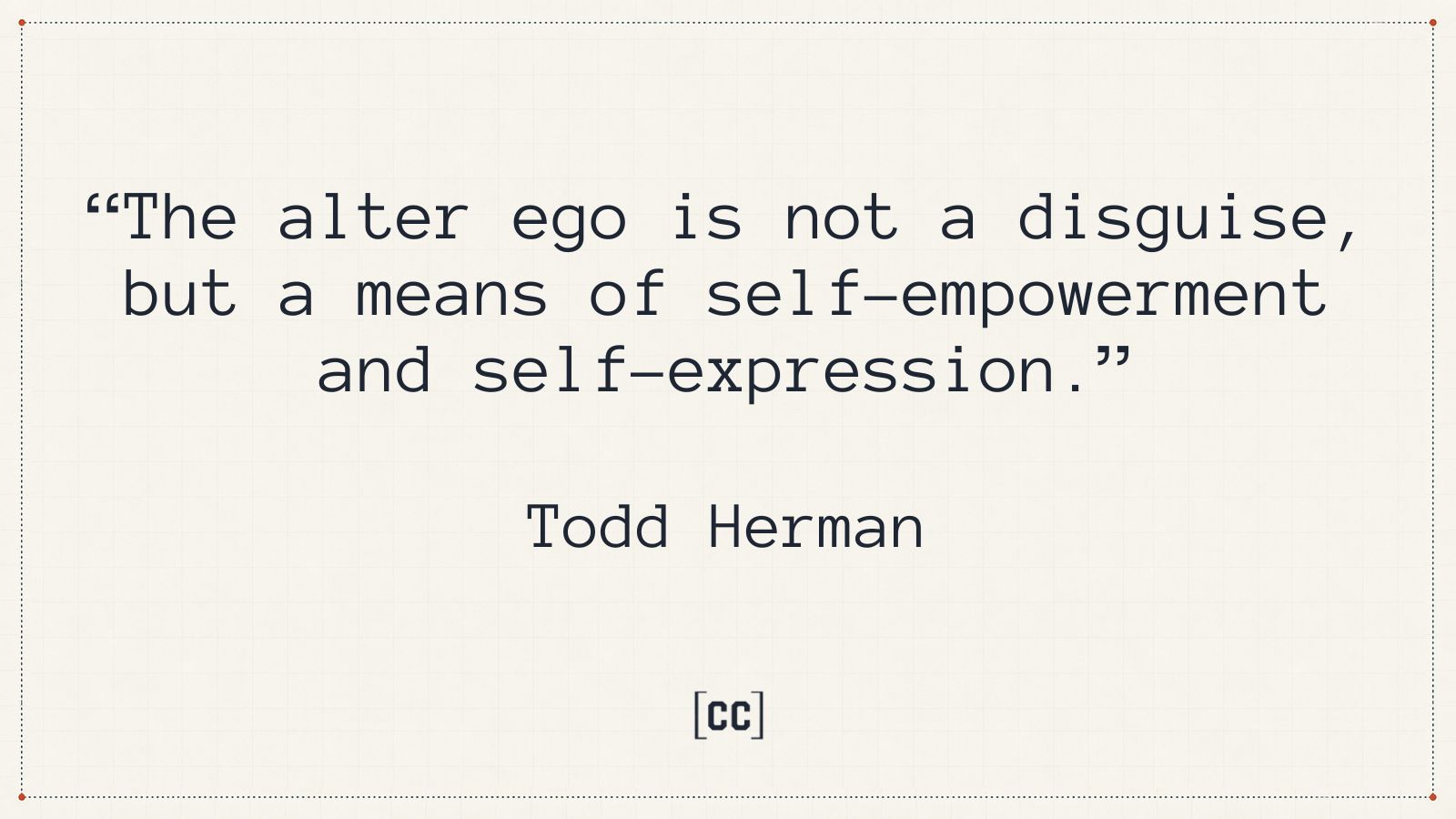
Now I understand that finding my heroic side is about activating the traits I’ve been building and nurturing my whole life. Reading Todd Herman’s The Alter Ego Effect helped me formalize this process. The book gave me language for something I had already been practicing intuitively, the idea that we can intentionally create conditions that help us access the best version of ourselves.
Over time I realized that every hero persona I create follows the same pattern. I identify the traits I admire, study how I behave when I am at my best, create rituals and environments that support those behaviors, and reinforce them through preparation and repetition.
My process consists of two exercises.
First, I look at environments where I already feel comfortable. I pay attention to how I speak, how I make decisions, and I begin to recognize patterns in my own behavior. I also look at the conditions that allow me to show up with confidence. Factors like preparation, rest, emotional state, and what I’m wearing all play into how I step into my heroic self.
Second, I think about environments where I feel vulnerable or uncertain. These are the situations where I am uncomfortable. I ask myself how the people I admire would operate in those same conditions. I also think about how I can create a process for myself to build confidence leading up to these situations.
This process gives me two reference points, one internal and one external. The goal is to understand the gap between who you are at your best and who you become under pressure.
I realized there is a big gap between my best self, when I’m in flow and at peak confidence, versus the version of me that is reactive and insecure. I often present my best self to people who don’t know me well because I want to win them over. At the same time I often show up as my worst self with the people closest to me.
I would show up as a leader at work, focused and energized, and then come home without the same energy for my wife. That realization forced me to reevaluate where I was placing my energy and attention.
I now have personas based on the relationships that matter most to me. Being a husband, son, and friend are the roles that carry the most weight in my life, and I want to be intentional about how I show up in each of them.
I also reflect on moments where I feel fully in control, whether in sports or speaking in front of an audience. In those moments, time seems to slow down and speed up at the same time. I am completely present and fully engaged. This is what we describe as flow, and it’s something that comes from preparation and repetition. When you reach that state, you’re accessing your highest level of performance.
Elite athletes rely on preparation, routines, and rituals that help them get into the zone. Before every game, LeBron James pours chalk powder into his hands and throws it into the air. It’s a ritual that hypes up the crowd but it also marks the moment where he flips the switch from preparation to performance.
This same idea can apply outside of sports and into everyday life.
Clothing, accessories, and personal objects can help us step into different versions of ourselves. When I wear specific items when I go to work I’m being intentional about how I want to show up. It’s similar to dressing up for a special occasion. When you put on something that makes you look good and feel confident, your posture changes, your tone changes, and your presence shifts.
One of the best examples of this came from a Creators Creed alumni who told me he hated negotiating fees. Discussing his work, ideas, and creative process came naturally. Pricing did not. Through the Hero Persona exercise, he came up with the idea of carrying a pair of glasses, despite not actually wearing them. Whenever the conversation shifted toward finances, putting them on became a way to pause, switch gears, and bring the same confidence he had discussing the work into the conversation about its value.
None of this works without preparation.
You can’t activate a persona without putting in the work behind it. If I’m speaking in front of an audience I don’t rely on the persona alone. I prepare by understanding the audience and knowing how to connect with them. The persona allows me to deliver it with clarity, but the work behind it is what makes it meaningful.
Instead of adapting to the room I am in, I decide how I want to show up, reinforce it through practice, and close the gap between who I am at my best and who I am at every other moment.
by