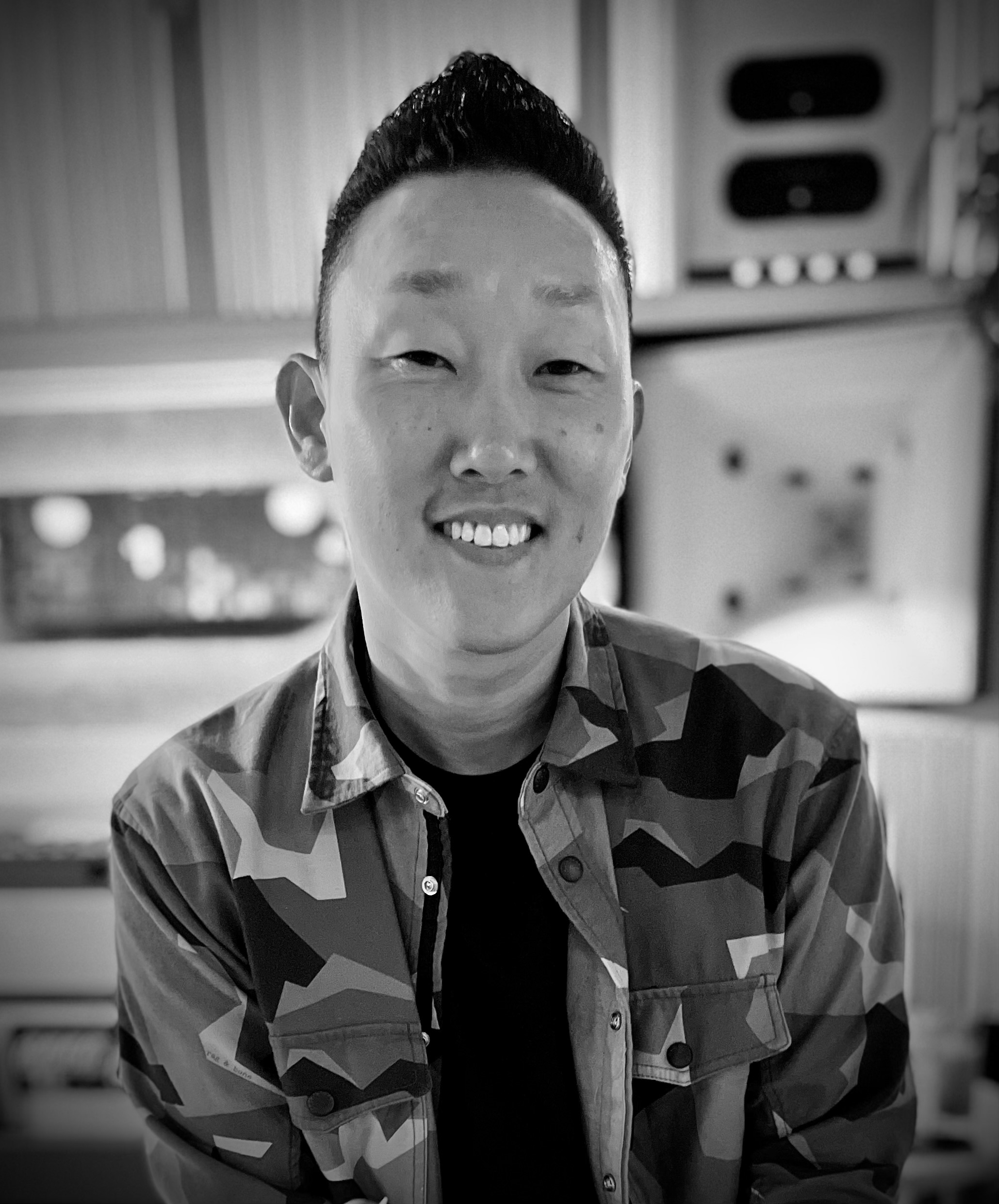
What's in a Name
Apr 21, 2026Festival season has officially begun and I’m preparing for my biggest event of the year in May. I spent the last two weekends watching the Coachella livestream and found myself intrigued by what separates the more experienced artists from the others.
The best performers are very clear about who they are and how they present themselves. You can spot the newer artists still figuring it out. Their outfits, choreography, even their voices feel like they’re still forming. Then you see artists in their prime who are completely locked in, commanding their show with confidence, controlling the crowd and knowing exactly how to draw them in. And then there are the veterans who have been doing this for decades, holding onto the version of themselves that defined their peak and bringing their audience back to those moments of nostalgia.
Most often these artists show up as their alter egos. A super-powered version of themselves under an artist name or stage name, with an identity that represents their work and gives people a story to connect to. The alter ego creates a separation between who they are in their personal life and who people experience publicly.
Dolly Parton is extremely intentional about the person she is privately versus the persona she shares on stage and in public. Prince took that even further, changing his name entirely as a way to reclaim ownership over his identity and his work.
I’ve always wondered why this practice isn’t more common outside of music.
Fashion designers often build entire brands around their names, turning their identities into something people trust and buy into. They might spend their entire careers building that name only to lose control of it later. Kate Spade and Calvin Klein come to mind.
My name was given to me by my grandfather. I was the first one in my large family to be born in the United States after my parents immigrated from Korea in the ’70s. Most Korean kids I grew up with had Korean names and chose an English name for themselves so they could fit in. Those names were usually biblical. John, David, Esther, Mary.
My grandfather wanted something strong and American. Somehow that became Jerry.
Growing up in Texas, people would call me Jerry Lee Lewis and shout “great balls of fire” when they learned my name. For a long time I had no idea what they were talking about. Ultimately I didn’t mind being associated with a rockstar, but the name itself never really felt like me. It was something I carried, not something I chose.
In college, a close friend started calling me Jerry Wonder. He was a big fan of the Fugees and their producer Jerry Wonda. I loved the connection so I adopted the name willingly.
When I started DJing, I became Jerry Wonder. When I started my corporation in 2007, it became J Wonder, Inc. When I started my design studio it became Project Wonder.
At the time, I didn’t think of Jerry Wonder as a persona. It felt more like a separation. One version of me handled business, another version handled creative work, and I moved between them depending on what was needed.
Growing up in Texas, I learned how to adjust depending on where I was and who I was with. I spoke Korean at home with my parents and English with a Southern drawl with my friends. I adjusted without thinking, doing whatever made the situation work.
Looking back, that was code switching for the purpose of survival. It helped me move through different environments, but it also meant I was always responding to what was around me instead of deciding how I wanted to show up.
Today I use my identity with intention. I’m a husband, son, brother, dog dad, friend, artist, and business owner. Each of those identities has relationships that require something different from me, and I try to be present for what each one needs. That only works when I decide ahead of time how I want to show up. If I don’t, I move through the day reacting to everything around me.
That used to be my default. For a long time I shaped myself based on what I thought people wanted so I could be accepted. Over time that shifted into something more deliberate. I started defining what I valued in how I operate, not just who I was trying to impress.
In the early stages, I looked outward. I paid attention to people I admired and tried to emulate specific characteristics, how they spoke, how they carried themselves, how they made decisions. That was useful when I didn’t have the experience yet.
But over time, that approach started to change. I realized I didn’t need to act like anyone else. Everything I needed was already there, built through years of experience. What I was really doing was identifying and reinforcing parts of myself that were already working.
There was a gap between how I saw myself and how others experienced me. In my work, clients were already treating me as a creative professional and an artist way before I fully claimed either identity for myself. Accepting that required me to stop waiting for validation and start stepping into the role that was already being defined through my work.
Now I have multiple personas that I step into depending on the situation. At music festivals, my goal is to let the work speak for itself. I’m focused on leading my team and making sure everything runs the way it should. Once the show starts, I stay in the background. I’m usually dressed in black with a baseball cap, not to hide, but because that’s the uniform that allows me to focus and stay out of the way.
When I’m meeting clients or collaborators, I show up differently. I’m more intentional about how I dress, the shoes I wear, the way I present myself, because that’s the environment I’m stepping into. Most people don’t know I’m doing this, but it allows me to meet the moment with clarity instead of reacting to it.
In the beginning, clothing felt like armor. It helped me protect myself from criticism, from doubt, from not feeling ready. Over time it became something else, a uniform I step into that helps me access the version of myself I want to bring into that moment.
There are still times when I can feel myself slipping back into reacting instead of deciding. That version of me is familiar, shaped by years of adapting to fit in. The difference now is that I recognize it and can choose something else.
Project Wonder began as an experiment. I called it a “project” because it felt like a shot in the dark that may or may not materialize. With experience that has transformed into something new. Now I’m projecting wonder through my work, creating experiences that inspire play and curiosity.
That shift changed everything. The same behavior I learned early on to fit in became something I now use to operate with intention. I’m no longer adjusting to the room. I’m deciding how I want to show up in it, and that decision shapes how others experience me.
There’s a process behind how I arrived here, and I’ll break that down in the next journal.
by