Designing for Meaning
Jul 14, 2026Design is often discussed through the things it produces, whether that is a product, a visual identity, or an experience. The longer I work as an artist, the more interested I become in what the creative process reveals about the relationship between the work and the people experiencing it.
I recently finished reading Virgil Abloh's biography, Make It Ours, because I wanted to understand his extraordinary rise. Within a remarkably short period of time, he became one of the most influential creative directors in the world, working across fashion, music, and culture before eventually leading menswear at Louis Vuitton. I wanted to understand why his work resonated so deeply with people.
What struck me most was how closely his success and influence were tied to the relationship he built with his audience.
Abloh had a 3% rule, which proposed that changing an existing object or concept by only three percent could create something entirely new. Coming from the worlds of hip-hop and dance music, he treated remixing as a core part of his creative philosophy. He openly shared his references, acknowledged his influences, and invited people to see how his ideas evolved. His work rarely appeared as though it arrived from nowhere. You could recognize the source material, follow the subtle interventions he made, and appreciate how those changes transformed the meaning of the work without concealing where it began.
His transparency made the work feel accessible because people could understand how he thought. That allowed them to participate in the conversation surrounding the work rather than simply consume the finished product. Abloh’s approach has expanded my understanding of design.
One of the guiding principles of design is empathy. It often begins with identifying a user's needs and creating an appropriate solution. This concept has shaped some of the most important products and services in the world, and I think it remains essential. But this view alone doesn't explain what made Abloh's work resonate so deeply with people. We need a broader definition.
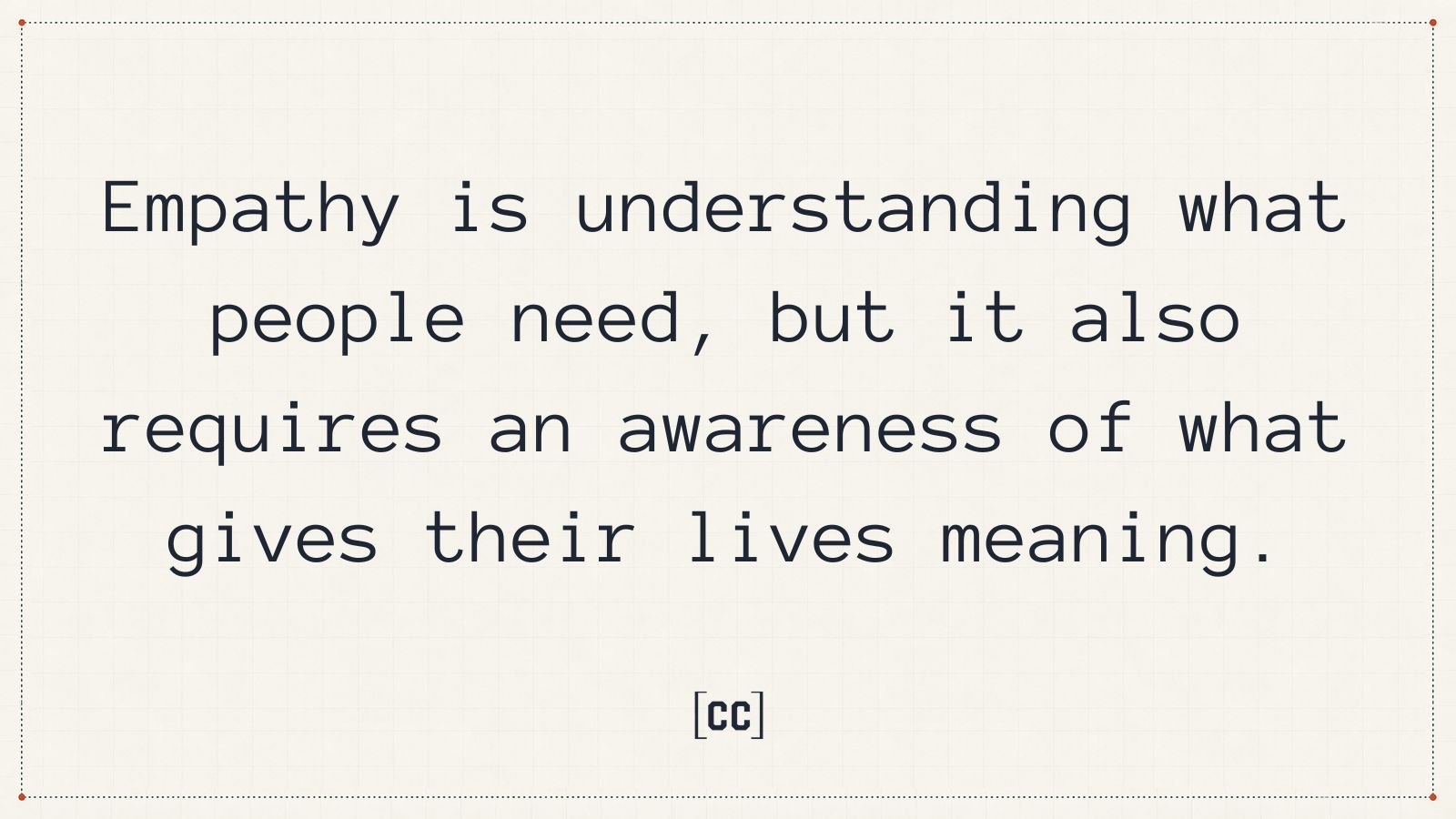
People rarely seek out a fashion collection or attend a music festival because it solves a practical problem. They engage with creative things because it helps them express themselves, experience belonging, and participate in something that reflects who they are or who they hope to become.
Understanding those desires requires a different expression of empathy. It depends less on solving problems and more on developing a sensitivity to culture. It asks us to notice the music people share, the references they recognize, the stories they tell, and the identities they are continuously shaping.
Abloh stayed remarkably close to the communities that shaped his work, and that sensitivity gave him an intuition for what would resonate long before the rest of the industry recognized it. His willingness to reveal the work as it evolved reflected that relationship.
I’m learning to recognize the same principle in my own practice.
When I begin developing a new concept, I spend far more time thinking about the people than the object. I think about how they will arrive, what they'll notice first, how they'll participate, and what they might carry with them afterward. The form comes later. Even then, I know it will continue to evolve once people begin engaging with it.
Business schools teach strategy, finance, and operations, all of which matter when building something sustainable. I find it equally important to help founders become more attentive to the people they hope to serve. Creative professionals already understand aesthetics, storytelling, emotion, and culture because those are the materials they work with every day. Those abilities become an advantage because they shape how people interpret the work, relate to it, and decide whether it belongs in their lives.
When you make something and place it into the world, people respond in ways you never anticipated. Their responses introduce new questions, challenge assumptions, and change the meaning of what you created. Each iteration teaches you something about your work while deepening your understanding of the people experiencing it.
I'm always searching for clarity, and I've found that it rarely arrives in the early stage of the process. I learn far more by making something, sharing it, and paying attention than I ever do through planning alone.
by