As Much Time as It Takes
Jun 02, 2026Recently I completed my 8th year at Electric Daisy Carnival. I consider EDC my Super Bowl, the biggest event of my year and the one that requires the most preparation. Every year teaches me something new about myself. This year taught me how much time I am willing to dedicate in order to have a successful event.

In this phase of my life, I am starting to question the boundaries and limitations I once believed I had. Every time I think I have reached my physical or mental limit, I find another level of capacity. Preparing for EDC demanded weeks of singular focus, which revealed both the power and the cost of that level of commitment. I did not have much room for anything else. My newsletter schedule slipped. Other projects moved to the side. The event required my full attention, but the result made me proud because I could see the standard I was willing to hold.
I feel like I am on a path toward becoming great at what I do. Greatness usually gets measured by comparison. We look at who has more recognition, who gets the bigger opportunity, who sells more, or who has the most followers. I have spent much of my life understanding achievement through that lens, but I am beginning to see greatness differently.
Here’s how I view the different levels of ability.
Average → Capable → Good → Excellent → Great → Mastery
Average means you understand enough to be in the room, follow the conversation, and perform the basic functions.
Capable means people can trust you with responsibility. You may still need guidance, but you can deliver without someone carrying you through the process.
Good means you can deliver with consistency. You understand quality, make thoughtful decisions, and produce work that earns respect.
Excellent means you can perform at a high level under pressure. You are prepared, and bring judgment, resilience, and care to the work, especially when the conditions become difficult.
Great means the work carries a recognizable standard. Your point of view and decisions feel authored. People understand what you stand for because the work keeps proving it.
Mastery is rare because it requires a lifelong relationship with a specific skill, subject, or body of work. Modern convention often points to the 10,000 hour rule, where investing that much time into a skill can lead to mastery. Psychologist K. Anders Ericsson’s actual research was more specific. Mastery does not come from time alone. It comes from deliberate practice: focused effort, feedback, repetition, correction, and the willingness to keep refining the parts of the work that still need attention. Hours matter, but devotion changes what those hours mean.
Mastery is not a title you claim, it is a relationship to the work, built through devotion, repetition, humility, and the ability to create at a level where technique becomes internalized. When technique requires less conscious effort, the mind has more space for creativity. The less energy you spend reacting to the environment, the more capacity you have to shape the experience.
When I started my journey as an artist, I set a goal to pursue mastery. Now I am learning there are levels to this path. Mastery may be a lifelong pursuit, but for now I am trying to understand what it means to become great.
Throughout my life, I have managed to go from average to excellent at many things I worked at. School, sports, and work all gave me a certain level of success and recognition. Some of these activities came naturally to me. When I put in more effort, I got better. That pattern taught me to believe improvement was available through effort, which served me well for a long time.
I could measure achievement in those areas through comparison. Grades, rankings, awards, promotions, recognition, and opportunities made it easy to see where I stood. That mindset served me in some ways because it pushed me to work harder, but it also trained me to measure progress by distance. Who was ahead of me or behind me. Who reached their goals or milestones first or who made more money than me.
Eventually I started to recognize the gap between excellence and greatness. Excellence proved I could perform at a high level, but greatness asked for something deeper: a standard I could return to again and again until the work became unmistakably mine. Evaluating my progress through comparison alone wasn’t going to get me there.
Creative work has started to change my measurement system.
In my world now, I am surrounded by incredible artists who are achieving at the highest level. Some of us may pursue similar opportunities or apply for the same commissions, but the work does not feel like competition. Their success does not diminish mine. When I witness another artist’s dedication, commitment, and level of care, I feel inspired more than threatened. I see people building a deep relationship with their work, and that kind of devotion changes the way I understand greatness.
I used to think greatness meant proving I could rise above others. Now I understand greatness as the willingness to care more deeply than the work appears to require.
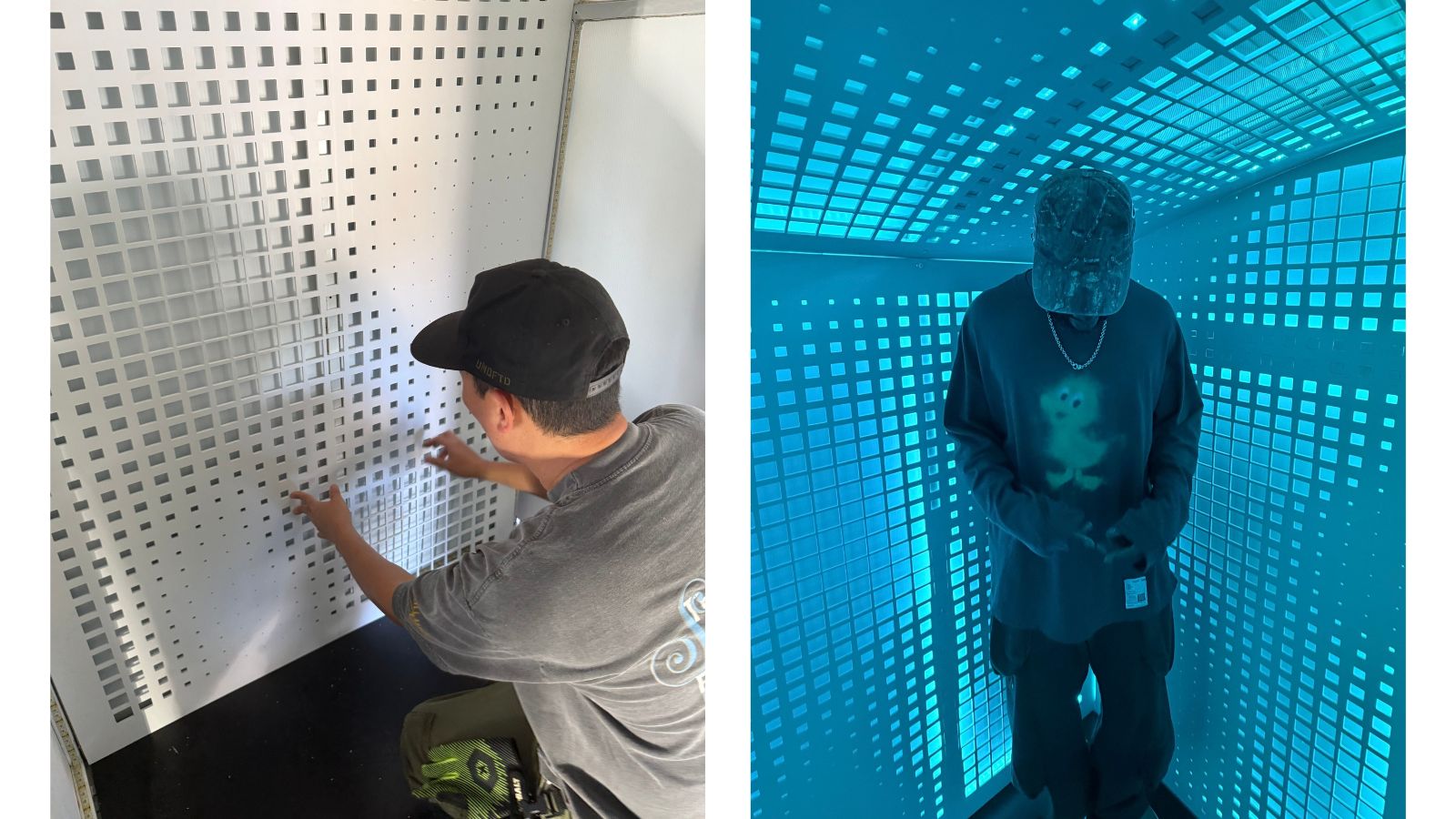
EDC clarified this for me. The preparation required weeks of focus because the experience deserved that level of care. The audience would never see every creative conversation, every revision, every technical decision, every hour spent fixing problems. But I believed they would feel the standard, and that the work had been cared for.
That is the part creative founders need to understand.
Many founders build their businesses from comparison. They compare their audience size, revenue, clients, press, pricing, and speed of growth. Comparison can create motivation, but it can also distort the work. It can push a founder to chase recognition over responsibility and scale before quality. A business grows stronger when you replace comparison with a standard of care.
That standard shows up in the client experience. It also shows up in communication, preparation, and the promises the business chooses to keep. Clients can feel when care has shaped the experience. Over time, that care becomes trust. Trust is what allows people to return, refer, forgive small imperfections, and believe the next promise you make.
This is where greatness becomes practical. It is not an abstract ideal or a motivational word reserved for people at the top of a field. Greatness begins when you decide the work deserves more care than the minimum requirement. It grows when you hold that standard long enough for people to recognize it. It deepens when the standard becomes how you operate.
I am still learning what this means for me. EDC showed me the cost of singular focus, and it also showed me the pride that comes from giving the work everything it requires and more. I am not trying to become less multi-dimensional. I am learning how to give my full range a clearer direction. Maybe that is my path from excellence to greatness, choosing the work that deserves as much time as it takes.
by