What Rejection Reveals
Dec 16, 2025A couple of months ago I pitched a concept for a major opportunity. I knew it was a long shot, but that didn’t stop me from pouring myself into it. The proposal reflected where I am creatively right now—sharp, confident, and fully committed. Winning the pitch didn’t feel like a vague possibility. I had closed the distance and made it feel real.
As an artist and entrepreneur, putting myself out there constantly is what I signed up for. I learn to live with risk and try to build resilience around it. But when I don’t get what I want, it still hurts.
The answer finally came: “We’re moving in another direction.” My heart sank.
Clients rarely know what happens behind the scenes when you're building a proposal. The research, the exploration, the long hours of shaping and editing. Every pitch becomes an act of blind commitment and belief. You’re not just offering a concept, you’re offering a piece of yourself.
The opportunity cost is high. You have to pause other work to give a big project a real shot. And you're not getting paid to pitch. So when the answer is no, it stings both emotionally and financially.
I’ve been through this process enough to see how my response to it has changed over time. The younger version of me would’ve gotten pissed, rationalized what went wrong, and redirected that energy into proving them wrong. It’s the competitive nature of how I grew up, to get angry and turn it into motivation. I never would have let myself just sit with disappointment and be sad.
But I’ve learned that grief doesn’t disappear when ignored. If you bury it, it shows up in other ways. It leaks into the next project, into decisions and relationships. Over time, it makes you react in ways that aren’t helpful.
So I let myself feel it this time. Not to dwell, but to stay honest. The project and the person behind it are always connected, but they don’t have to be the same. The concept I pitched was a reflection of my care and intention, but it wasn’t me. If I can hold that distinction, I’m less likely to take the rejection personally and more likely to return to the work with clarity.
In Bittersweet, Susan Cain writes about how sorrow and longing are not detours from creativity, but the very forces that shape it. She names the “tyranny of positivity” that asks us to quickly convert pain into momentum, rather than honoring it as a source of depth, meaning, and emotional truth.
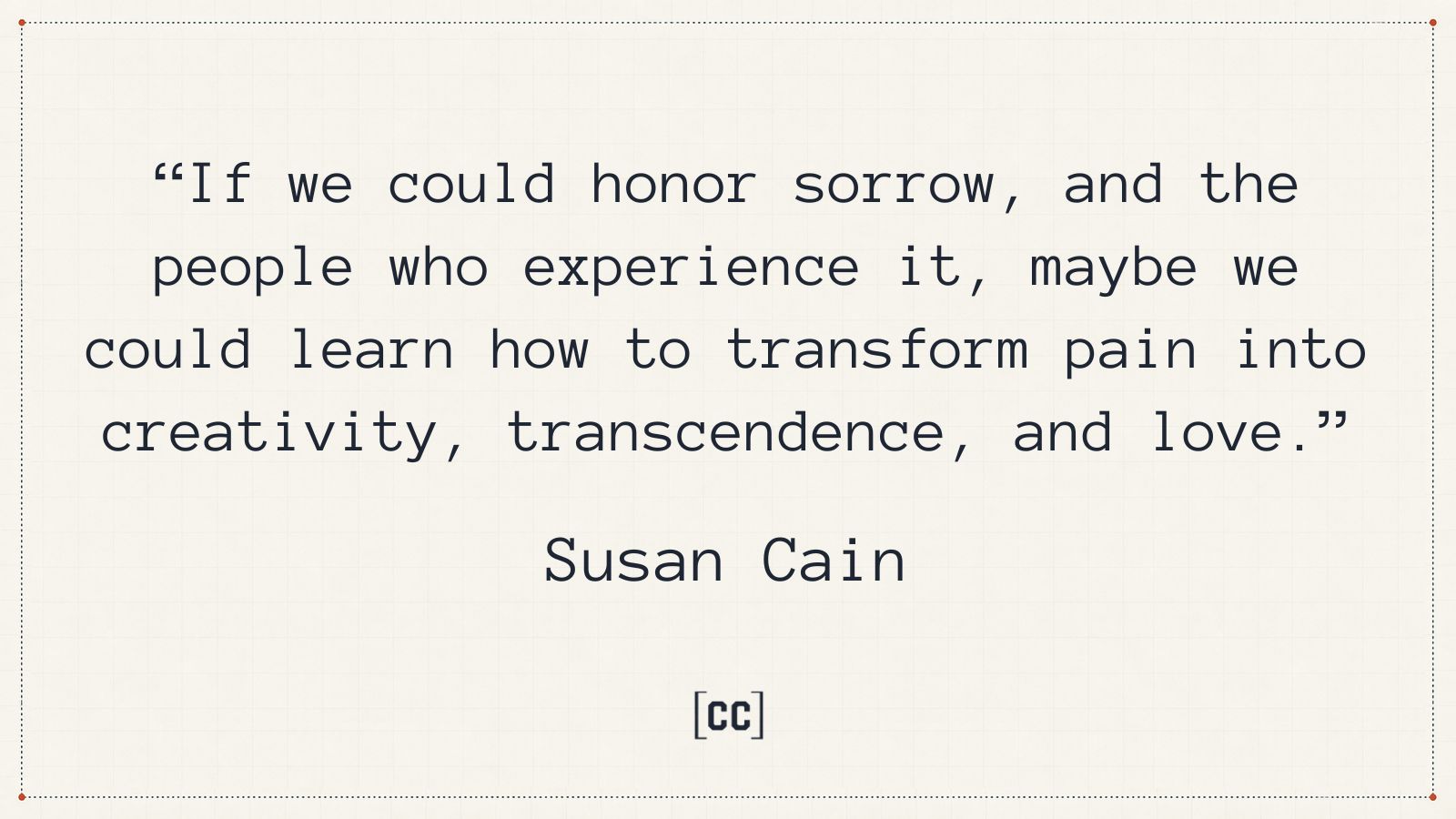
Not everything needs to be spun into a lesson or turned into fuel. Sometimes clarity comes from staying with the loss long enough to understand what it’s trying to say.
Sitting with these feelings has allowed a few ideas to surface.
One is that the longing itself is a signal. The reason it stings is because the idea mattered. The pain is a reminder I’m not chasing random opportunities. I’m pursuing work that feels alive. And even when it doesn’t land, the reach was worth it.
Another is that rejection brings clarity. It strips away the external validation and brings me back to a deeper question: do I still believe in this? If the idea still holds up, maybe it deserves another path forward.
And maybe most importantly, I’m seeing that sorrow doesn’t need to be rushed. It can be part of the process. Not something to overcome, but something to create through. That space has shaped some of my best thinking before, and I trust it will again.
I’m not keeping score or chasing the next thing just to move on. I’m staying with the work because I want to build a practice that’s durable, not reactive. That’s the part I can control.
Rejection will keep showing up. The real work is learning how to stay with your practice even when the outcome is uncertain. To keep showing up for the ideas that matter, not because they guarantee a result, but because they reflect the kind of work you want to stand behind. If you can build from that place, the yes or no becomes less defining. What lasts is the commitment to the path itself.
by