The Beauty of Boredom - Part 1
Jan 13, 2026I grew up in Texas, where summers were hot, humid, and relentless. Once school let out, summer break meant three months of unstructured and unsupervised days, spent mostly indoors to escape the heat. My parents worked all day and couldn’t afford camps or daycare, so my older brother and I were left on our own to figure out how to fill the time.
That time was not empty. We were both creative kids and our interests showed up in many ways. I sketched constantly, drawing scenery, landscapes, characters, and simple flip-book animations that brought them to life. We didn’t have a lot of toys, just a few random LEGO sets and a small collection of Hot Wheels, but we explored all the different ways to build and rebuild scenes to play with.
We had space to create because there was no one telling us what to do. But we were not in an environment that recognized creation as anything more than child’s play. The drawing, the building, and the hours absorbed in making things were treated as ways to pass time, not as skills connected to any future version of success.
Because of that framing, creativity felt temporary. It belonged to childhood, lingered awkwardly through adolescence, and eventually gave way to pursuits that looked more productive and worthwhile. The message wasn’t explicit, but it was consistent enough to shape how I understood the value of time.
That belief followed me into adulthood. Even as I continued to explore creative work, I categorized it as secondary. When I could finally afford it, I bought turntables and a mixer and built a DJ setup in my spare bedroom. I needed an outlet from a job I didn’t love and a two hour daily commute that drained me.
Most days I would get home from work not feeling inspired to DJ. My brain was occupied with stress and had no room for a creative outlet. But on some drives home, I left the radio off. Somewhere between the traffic and the quiet, ideas started assembling on their own. I started to notice that on those days, the DJ sessions were immersive and generative, with hours spent piecing together new combinations and discovering new music.
I didn’t realize what was happening at the time. Since it was just a hobby I didn’t treat it as serious thinking. It lived outside my professional identity, separate from the activities that paid bills or signaled progress.
Only much later did I start to recognize a pattern. So many periods of boredom or stillness in my life had been filled with creating something. It was the condition that allowed creative exploration to unfold without pressure. The value was not in killing time or having an outlet, it was in building a process for my creativity.
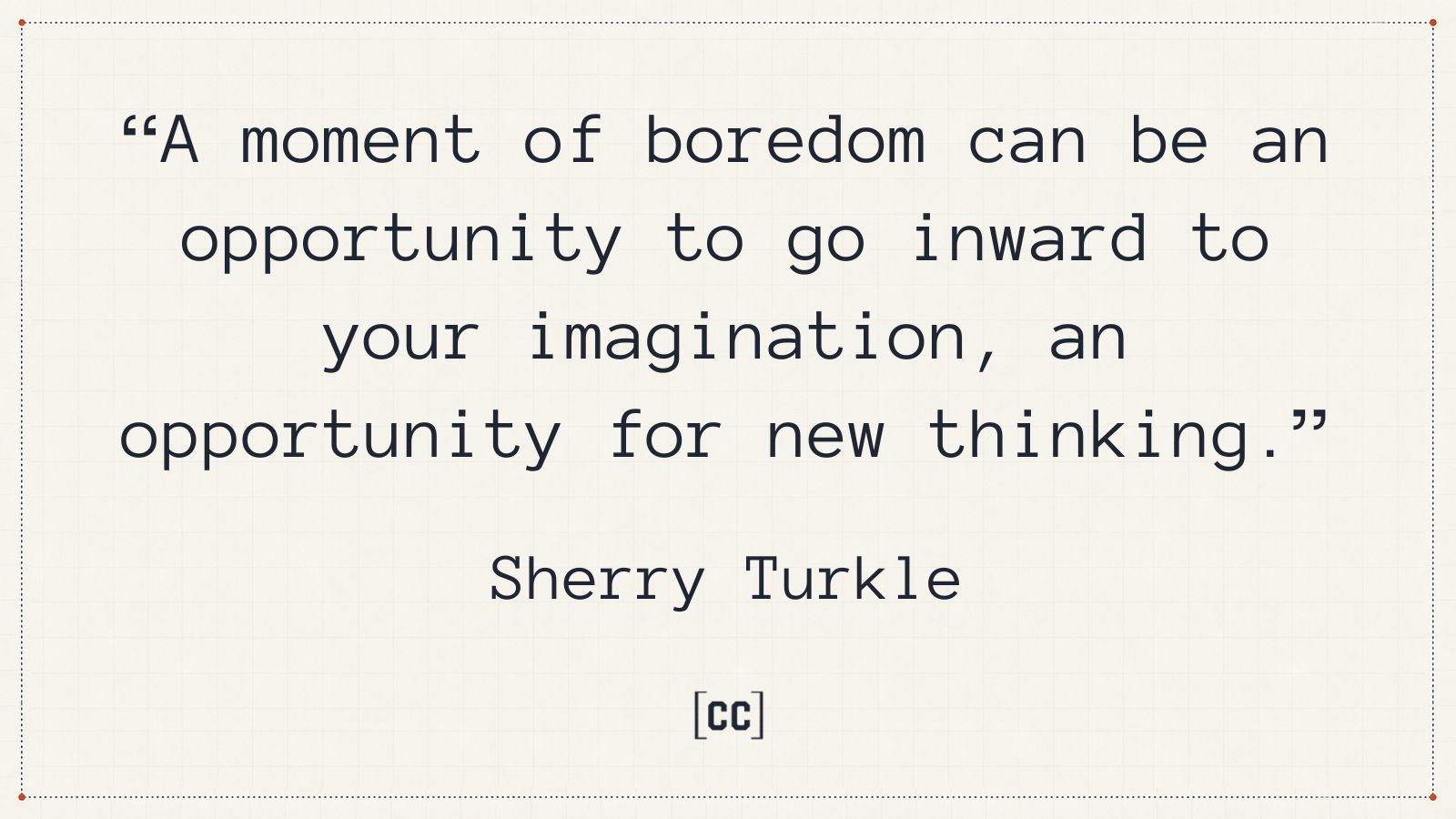
Research helped me articulate what I had experienced intuitively. In the early 2000s, neurologist Marcus Raichle identified what became known as the brain’s Default Mode Network, a system that becomes active when attention is no longer focused on external tasks. This might occur when you drive your car in silence, take a shower, or go on a walk. Without distractions, our mind begins to wander freely or daydream, reflecting on the past or imagining the future. During these periods, the brain supports memory integration, imagination, and meaning-making.
Raichle’s work showed that thinking doesn’t pause when visible effort slows. It shifts into a different mode, one that allows experience and information to organize beneath awareness, often outside of conscious control.
That foundation connects directly to creative work. In The Creative Brain: Myths and Truths, cognitive neuroscientist Anna Abraham describes creativity as emerging through interaction between focused attention and systems active during rest and mind-wandering.
What I’m really pointing to here isn’t just my own experience, it’s a way of thinking that most of us rarely give space to because it’s uncomfortable. The moments we label as boredom are often the first signs that our brain is shifting gears, moving away from reacting and toward something quieter and more integrative. Once you understand that this mode exists, it’s hard not to notice how often it gets interrupted. We fill every pause, reach for stimulation, and move on before that initial discomfort has a chance to settle into anything useful.
For many people, that discomfort shows up as reflection on the past, a sense of uncertainty about what’s ahead, or a vague restlessness that’s hard to place. It’s often easier to fill that space than to stay with it. But on the other side of that threshold is where deeper thinking tends to begin.
In the next part, I want to explore what it looks like to recognize that state as it’s happening, and how giving it room can change the way we think, create, and make sense of our work.
by